







Many companies already pay for AI tools. Far fewer can point to a process that runs differently because of them. The gap is rarely the technology. It is knowing where, in your own operation, AI will have a measurable impact.
A Forward Deployed Engineer (FDE) engagement closes that gap by starting from your daily work. One of our engineers joins your team for a week, inside your real processes, tools and workflows, and comes back with a ranked plan your leadership can act on. Here is how the engagement runs, step by step.
What a Forward Deployed Engineer is
The term comes from Palantir, where engineers were placed directly with clients instead of working from a distance. The idea is simple: the person who designs the solution should see the work it is meant to improve.
At Neurony, a Forward Deployed Engineer is an engineer embedded in your team for one week. Three things make the engagement different from a classic consulting project:
- An engineer, not an advisor. The person mapping your opportunities knows what it takes to build and integrate them, so the recommendations are realistic from day one.
- Real work, not workshops. The engineer looks at how your processes actually run, in the tools your team uses, rather than relying only on how they are documented.
- A decision, not a deck. The engagement ends with an action report that ranks every opportunity by impact and effort.
How the engagement runs
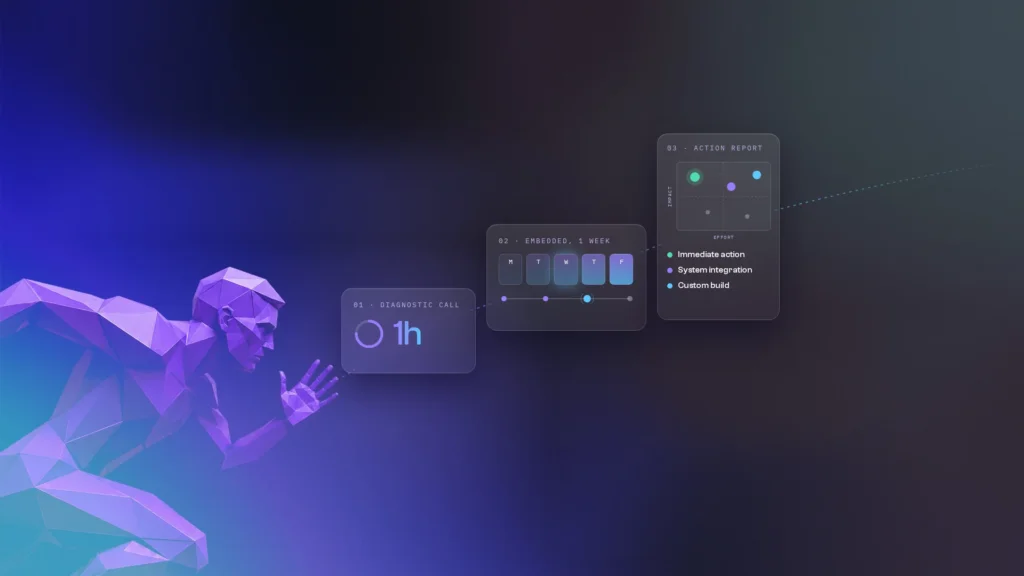
Step 1: A one-hour diagnostic call
Your team meets ours to map the operation: which departments and workflows to look at, which systems are involved, and where you already suspect time or money is being lost. You leave the call with a clear plan for what comes next, including who the engineer will work with and what access is needed.
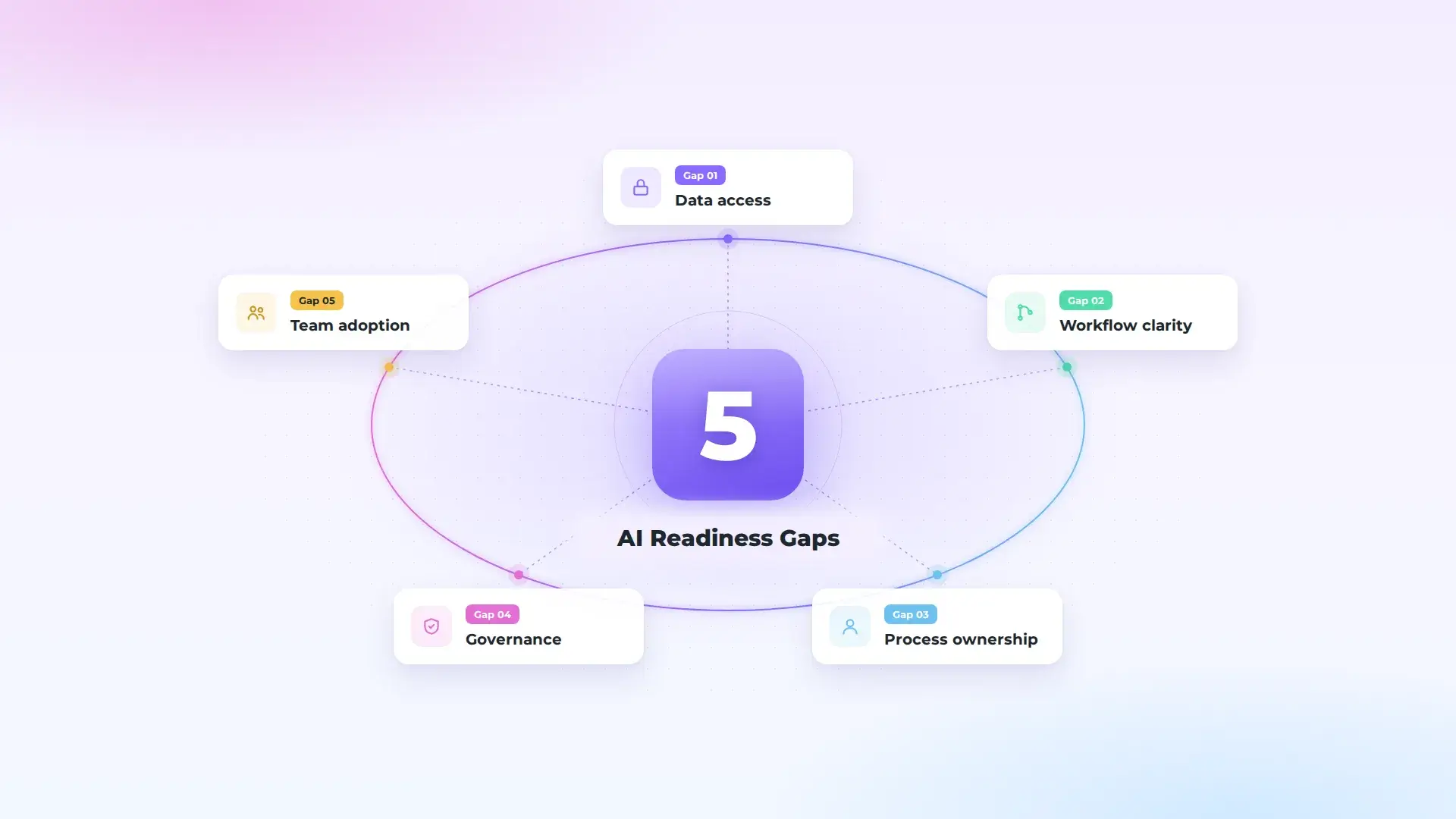
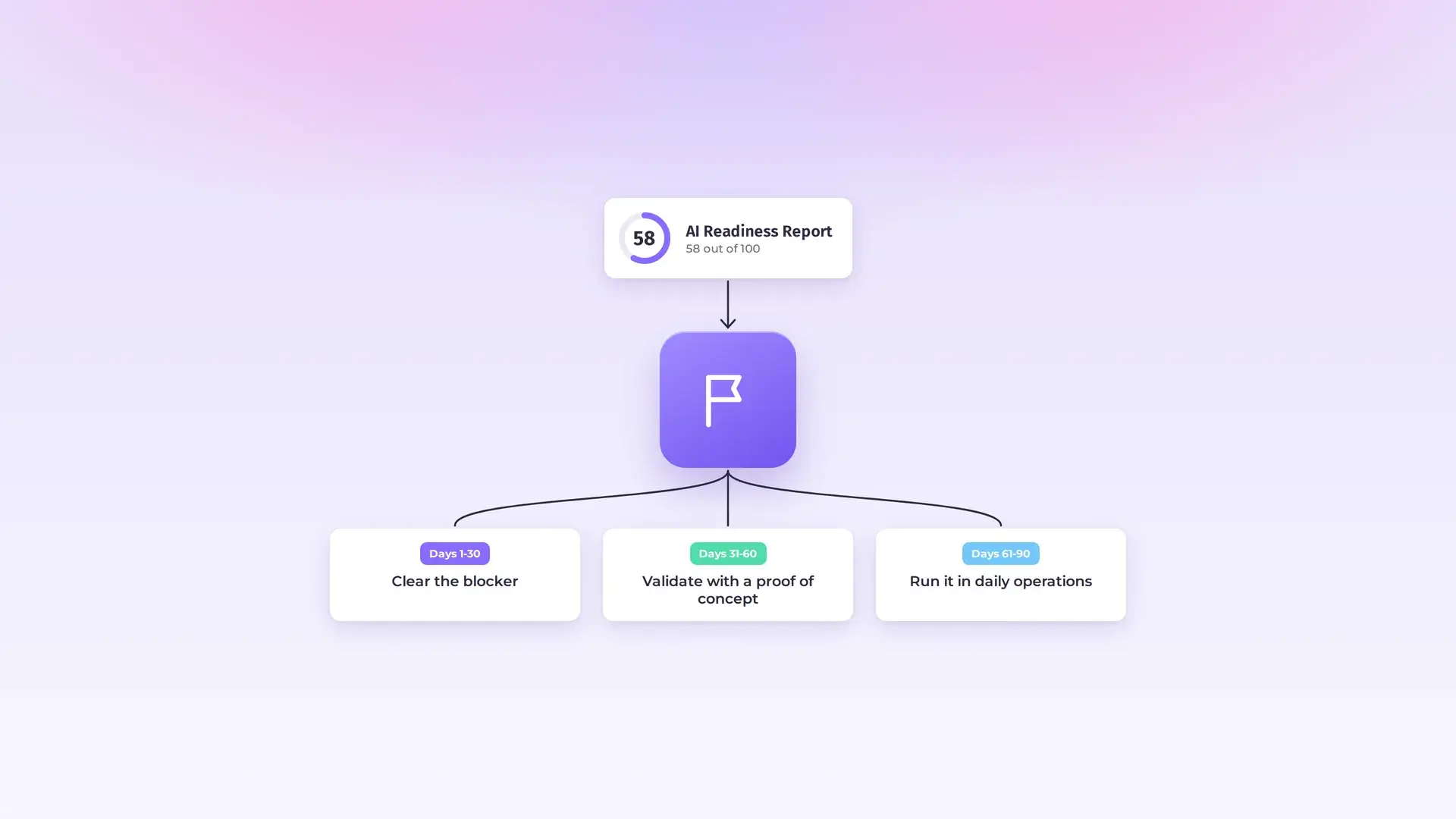
The call also tells us whether an FDE week is the right starting point. If the main blocker is missing data or unclear ownership, an AI readiness assessment may come first.
Step 2: One week embedded in your team
One of our engineers spends a week on-site with your team, working inside your operation with your real tools and workflows. If your setup needs a different arrangement, we adapt it. We organize the schedule with you, around your team’s availability.
During the week, the engineer focuses on:
- repetitive tasks that take up time your specialists could spend elsewhere
- information copied by hand between emails, spreadsheets and systems
- the data each process depends on, where it is stored and who is responsible for it
- the systems any AI solution would need to connect to, such as your ERP or CRM
- the workflow where AI would have the clearest measurable impact, and the metric that would prove it
Agreeing on that metric early matters. It gives everyone the same definition of success before anything is built.
Step 3: The written action report
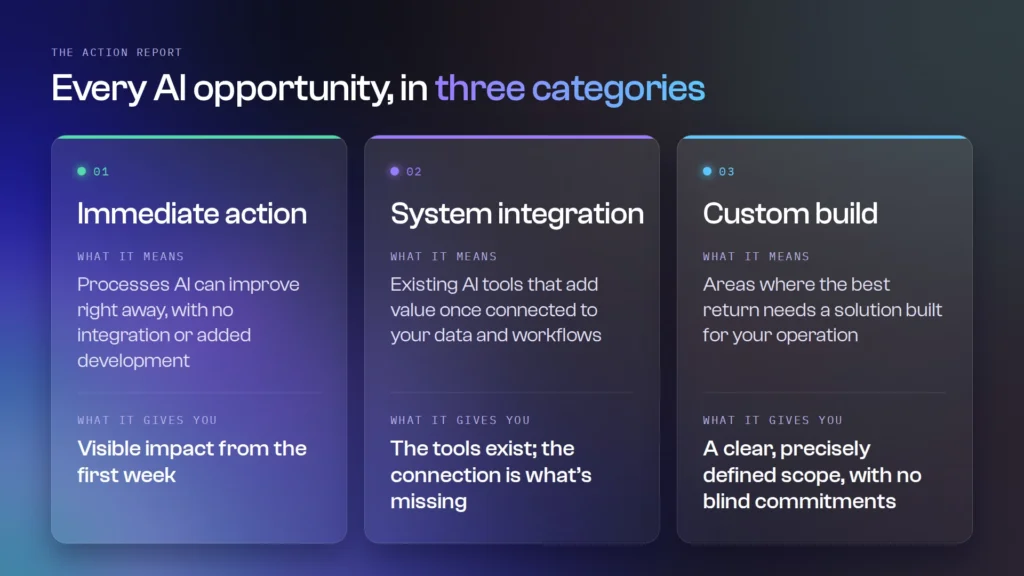
Within one week of the final session, you receive a written action report. It covers every AI opportunity identified during the week, ranked by impact versus effort and grouped into three categories.
The report is ready for a leadership-level decision. Some opportunities can start immediately. Others are worth validating on your own data first. Some are not worth pursuing, and the report says so clearly.
What happens after the report
There is no fixed next step. We shape it around what the report found and what your business needs.
Most clients start with one automation flow: the opportunity with the clearest value and an agreed metric. If that flow needs a custom solution, we validate it first. A scoped proof of concept may typically be delivered in approximately 14–21 days, depending on data access, integrations, technical complexity, and client availability.
Once the first flow is running in daily operations, many clients move into full implementation and a long-term partnership with us, adding the next workflows from the report one at a time. The full path is described in our AI adoption roadmap, and our guide to writing an AI integration plan covers what to decide before building.
Starting with one flow is how the Meesenburg work began. In the Meesenburg implementation, 98% of processed orders required no manual modification. Orders that used to be read from emails and documents and typed into the ERP by hand now go through an automated process that moved from pilot into production. The Meesenburg case study has the details.
What clients have built after an FDE week
The opportunities in the report are specific and operational. Examples from our clients include an AI chatbot that answers repetitive questions about orders, products and deliveries around the clock and hands over to a person when needed; a system that reads Excel data and produces ready-to-sign B2B contract drafts; and an AI check that compares invoices against contracts and delivery notes before approval.
When an FDE engagement is the right step
It is a good fit when:
- your team has access to AI tools, but daily work has not changed
- you have several AI ideas and no clear way to choose between them
- the process you want to improve crosses several tools, teams or systems
It is probably not the first step when:
- you already know exactly what to build and need delivery capacity, in which case a proof of concept may fit better
- leadership has not yet agreed that AI deserves investment, in which case the AI readiness assessment is a lighter starting point
Ready to explore how this applies to your business?
Schedule a meeting with our team to discuss your goals and next steps.
Schedule a meetingFor the full process and client examples, visit the Forward Deployed Engineer page.
Ana Oprita, who leads Forward Deployed Engineering at Neurony, wrote about her own path to this role in Twenty Years to Name the Job.