AI Transformation Across Core Business Processes

Meesenburg Romania is a distributor of building materials, hardware and construction-related products, serving customers through traditional sales channels and ecommerce. Its operations span multiple locations and connected processes, from order management, procurement and stock replenishment to contract generation, ecommerce and technical support, with most of the work running on the company’s ERP alongside email, Excel files and internal tools.
Meesenburg’s processes were functional, but many required more manual effort than necessary. Employees moved information manually between email, Excel and the ERP, sometimes copying data line by line. Shared spreadsheets acted as an operational layer for processes such as backorder management, with problems around simultaneous editing and traceability. Purchasing decisions, reporting logic and customer-specific exceptions depended on the knowledge of a few employees, so the absence of one person could delay or interrupt a process.
The challenge wasn’t one inefficient workflow. It was the same friction repeated across the business.
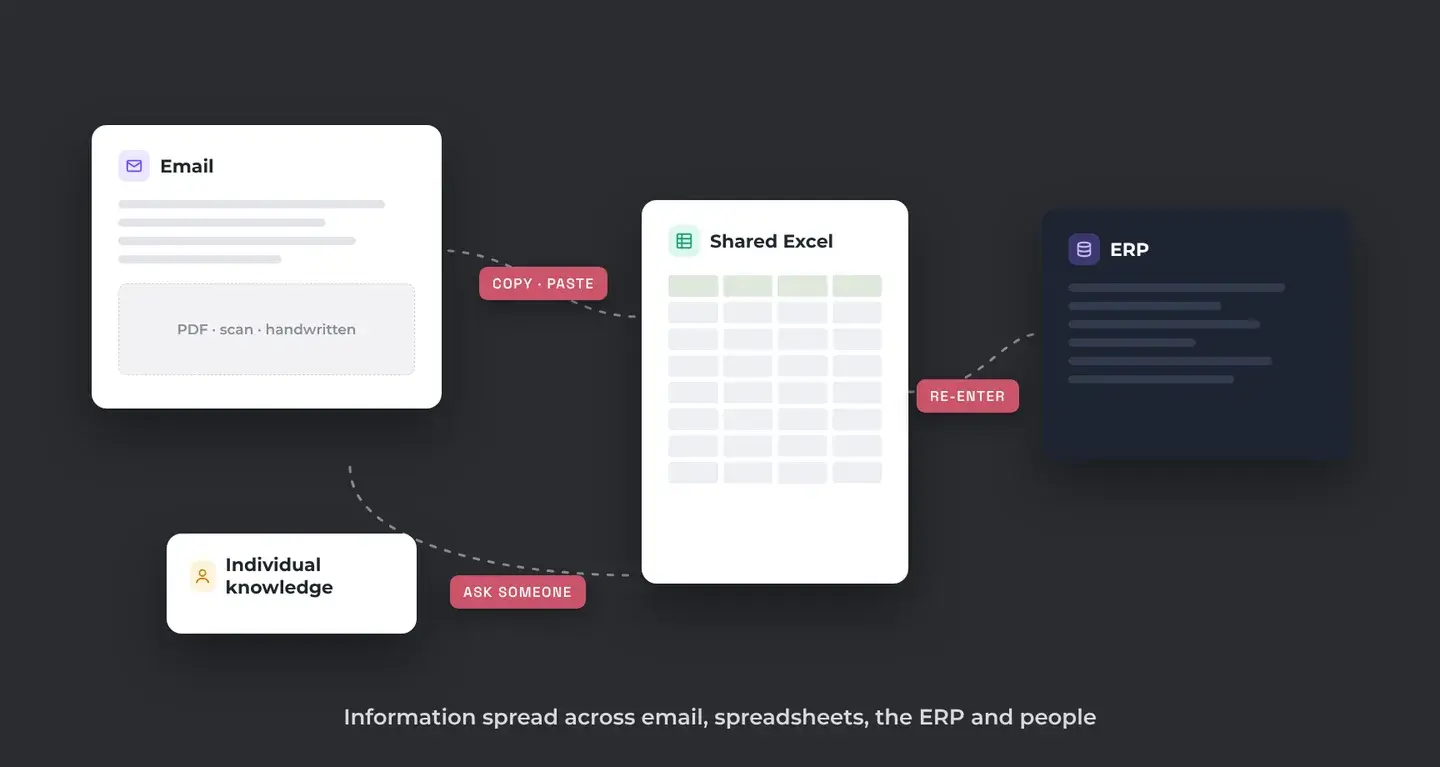
Neurony started with a Forward Deployed Engineer engagement covering 10 operational areas. Through discovery sessions with the people responsible for each workflow and an analysis of how each process ran, Neurony documented the operational risks and recommended solutions in a final executive report. The analysis mapped where AI could add value and where a process first needed better data, clearer rules or stronger system connections. That report became the basis for the implementation roadmap, starting with the workflows where the need and the available data were already clear.
The result is a transformation built around Meesenburg’s existing systems. Meesenburg reduced manual work in order processing, with approximately 50% of orders received by email now processed automatically, according to Meesenburg. It introduced direct ERP integration, added procurement decision support and automated contract generation from structured client data. The same technical foundation is now being used to extend automation into backorder management.
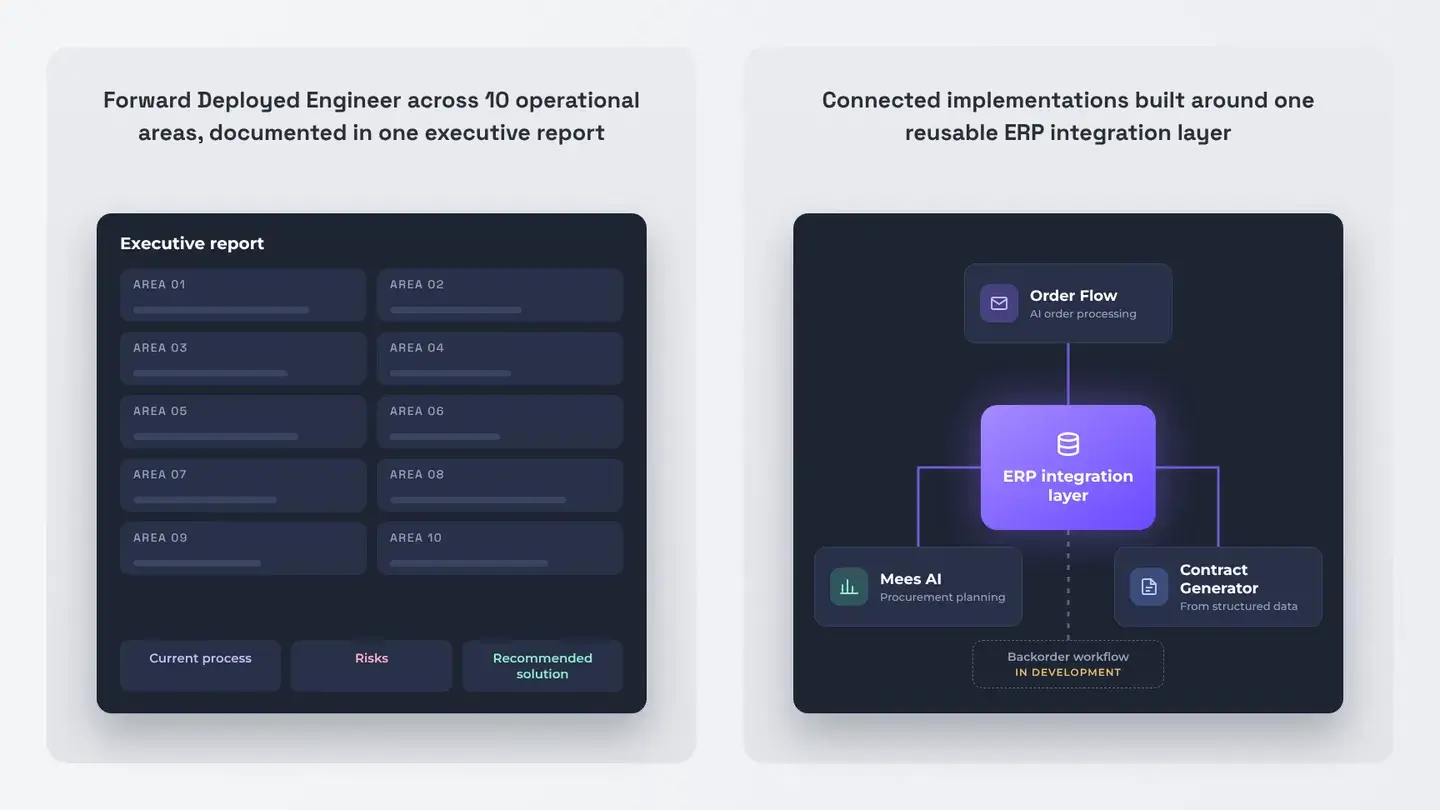
From One Report to Connected Workflows


